The Riviera Maya draws investors for good reasons. Tulum keeps growing, Playa del Carmen holds steady demand, and a well-run rental in either can perform. The trap for owners abroad is operational: they bring home-market furnishing habits to a tropical coast.
When a new villa or condo needs outfitting, the easy path is a container of familiar imported pieces or a big-box order. That furniture was built for a climate-controlled living room, not for Quintana Roo. If you want a Tulum interior that looks the part, or a Playa del Carmen coastal look, without replacing it in year one, you have to specify for the elements. Choosing furniture for a humid climate is an asset protection decision before it is a design one.
The humidity trap: why MDF, fabric and steel fail
The coast combines high humidity through most of the year with salt in the air. Standard manufactured furniture is not made for that, and the failures follow a pattern.
MDF and particle board are the first to go. MDF is wood fiber and glue, and in humid air it absorbs moisture like a sponge. The core swells, the veneer lifts, and a console that looked sleek on delivery looks warped within a year or so.
Upholstery is next. Standard fabric takes on moisture and holds it, and in a rental where guests leave doors open while the air conditioning runs, condensation builds quickly. The result is a mildew smell that no amount of cleaning removes, and guests write about it in their reviews.
Metal fails more slowly but more visibly. Salt air attacks untreated iron and cheap steel. Hinges seize, chair legs pit and rust, and fixtures leave orange stains on the floor.
Tulum and Playa del Carmen: same climate, different styling
The material rules do not change between the two cities, but the guest’s expectations do, and the design should follow the micro-market.
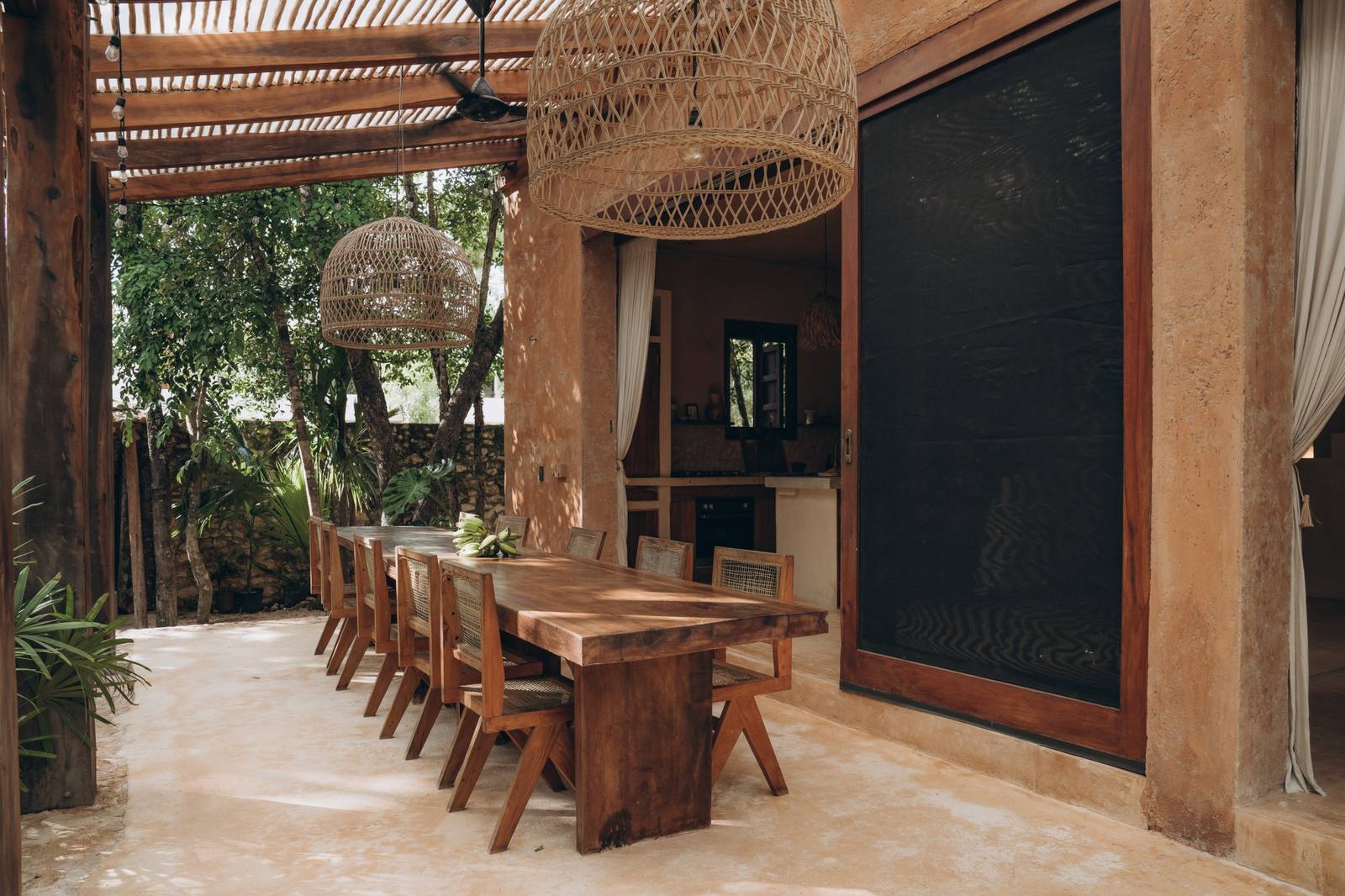
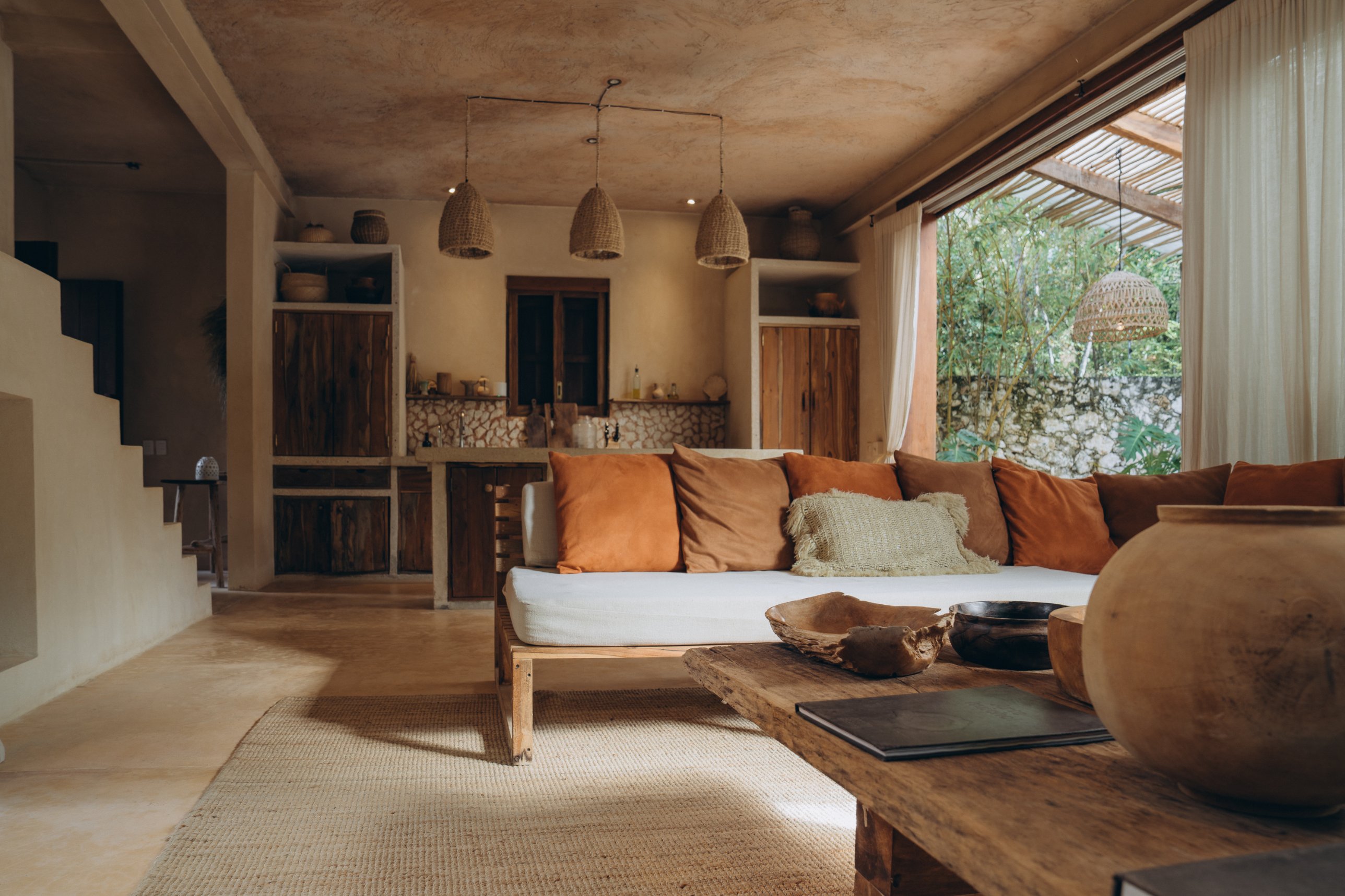
In Tulum, in areas such as Aldea Zamá, Region 15 and La Veleta, guests tend to expect an organic, wabi-sabi look: raw textures, solid wood tables, woven natural fibers such as bejuco, chukum plaster, and earthy neutral tones that blur the line between indoors and out.
In Playa del Carmen, near the center and in communities such as Playacar, the look runs sleeker. Think tropical modernism, polished stone, bright linens and clean lines that give the view and the light room to work. Our Playa del Carmen interior design page covers how we approach it.
Furniture is an operating cost
We look at interior design through the lens of operations. Furniture is not only decor. It is a line in the operating budget, and it affects yield in three ways.
First, lost nights. A villa with peeling or damp furniture cannot host guests comfortably, so the calendar gets blocked while pieces are removed and replaced, and those nights tend to fall in high season.
Second, import friction. Replacing an imported piece means customs, duties and a delivery window you do not control.
Third, reviews. Guests notice when a room feels cheap or smells damp, and the rating that results holds back the nightly rate for longer than the replacement takes. We cover that effect in our OpEx benchmarks for coastal short-term rentals.
Preservation means getting it right the first time, so that replacement is never part of the underwriting.
What to specify instead
Furniture that lasts on this coast is adapted to it. That means regional materials and a specification written for the climate.
Local hardwoods
The base of durable Riviera Maya furniture is solid local hardwood. Tzalam and parota are dense, heavy woods with a long history in the region, and a bed frame or dining table in solid hardwood handles humidity in a way that board furniture cannot. They also carry the authentic regional look that Tulum guests are looking for.
Performance textiles
Every piece of upholstery should be specified for heavy use in a humid room. We use commercial-grade, high-rub-count performance fabrics that resist mold and UV and wash easily.
Sealed and treated metal
Metal should be marine-grade stainless steel, powder-coated aluminum, or properly sealed against oxidation. Local fabricators know how to treat metal for the salt air, which is one more reason to source regionally.
Sourcing it from abroad
Finding hardwood suppliers, working with local makers and managing coastal logistics is a job in itself, and it is the one most remote owners find hardest to do well from a distance. That is the work our sourcing team does. We design the rooms and specify them for the climate, then handle procurement, fabrication, delivery and staging.
If you are furnishing a new property in Tulum, our Tulum furniture packages and Tulum short-term rental design work cover that end to end. For a condo or home in Playa del Carmen, start with our Playa del Carmen interior design page. If you are weighing a developer’s package first, read what to ask before you say yes.
Asset preservation starts before the first guest books. Furnish the property for the climate it sits in, and the rest of the operation has less to make up for.